.webp)


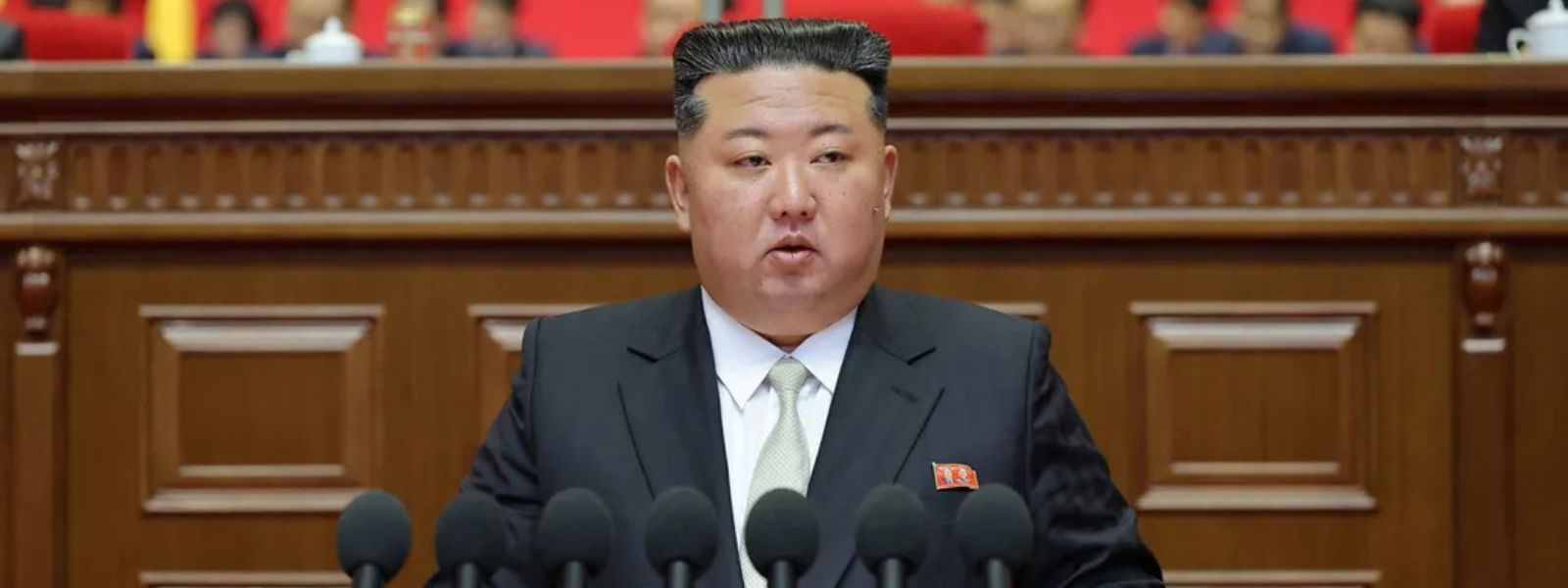
North Korea Grants Leader Command Over Nuclear Forces



.png )
COLOMBO (News 1st); North Korea has revised its constitution to include a new territorial definition and to remove all references to unification with South Korea, underscoring Pyongyang’s shift toward a policy of treating the two Koreas as separate and hostile states.
The revised document, reviewed by Yonhap News Agency on Wednesday at a press conference held at South Korea’s unification ministry, defines North Korea’s territory as the land bordering China and Russia to the north and South Korea to the south, along with its adjacent territorial waters and airspace. However, it does not elaborate on the long-disputed maritime boundary in the Yellow Sea, particularly around the Northern Limit Line, the de facto maritime border between the two Koreas.
North Korea first adopted its constitution in September 1948 and amended it five times before introducing a socialist constitution in 1972. After 12 further amendments, Pyongyang revised the document again this March, removing the word “socialist” from its title.
Contrary to widespread expectations, the revised constitution does not identify South Korea as a “primary foe,” despite earlier statements by North Korean leader Kim Jong-un characterizing Seoul as an enemy. In line with Kim’s stance of viewing the two Koreas as separate states, all references to reunification ,including phrases such as “peaceful reunification” and “great national unity,” have been removed.
The revision also omits references to the achievements of late state founder Kim Il-sung and Kim Jong-il, the current leader’s late father. Speaking at the press conference, Professor Lee Jung-chul, a North Korea expert at Seoul National University, said the changes appear to signal Pyongyang’s effort to project itself as a “normal” state.
He viewed the revision positively, noting that the absence of hostile language toward Seoul could lay the groundwork for peaceful coexistence between the two Koreas.
The constitution further strengthens the authority of North Korea’s leader by elevating the president of the state affairs commission to “head of state” and placing the position above the Supreme People’s Assembly (SPA) in the constitutional hierarchy for the first time.
A new clause grants the leader command over the country’s nuclear forces, including the authority to delegate that command.
In addition, the revision strips the SPA of its power to recall the president of the state affairs commission, effectively removing its nominal oversight role.
Other Articles








Featured News
-835300_550x300.jpg)



News 1st, MTV Channel (Pvt) Ltd, MBC Networks (Pvt) Ltd, 45/3, Braybrooke Street, Colombo-02.
T.P : +94 114 792 700,
Fax : +94 114 792 733
T.P : +94 114 792 700,
Fax : +94 114 792 733




 |  |  |
|---|---|---|
 |  |  |
 |  |  |
 |

.gif)