.webp)


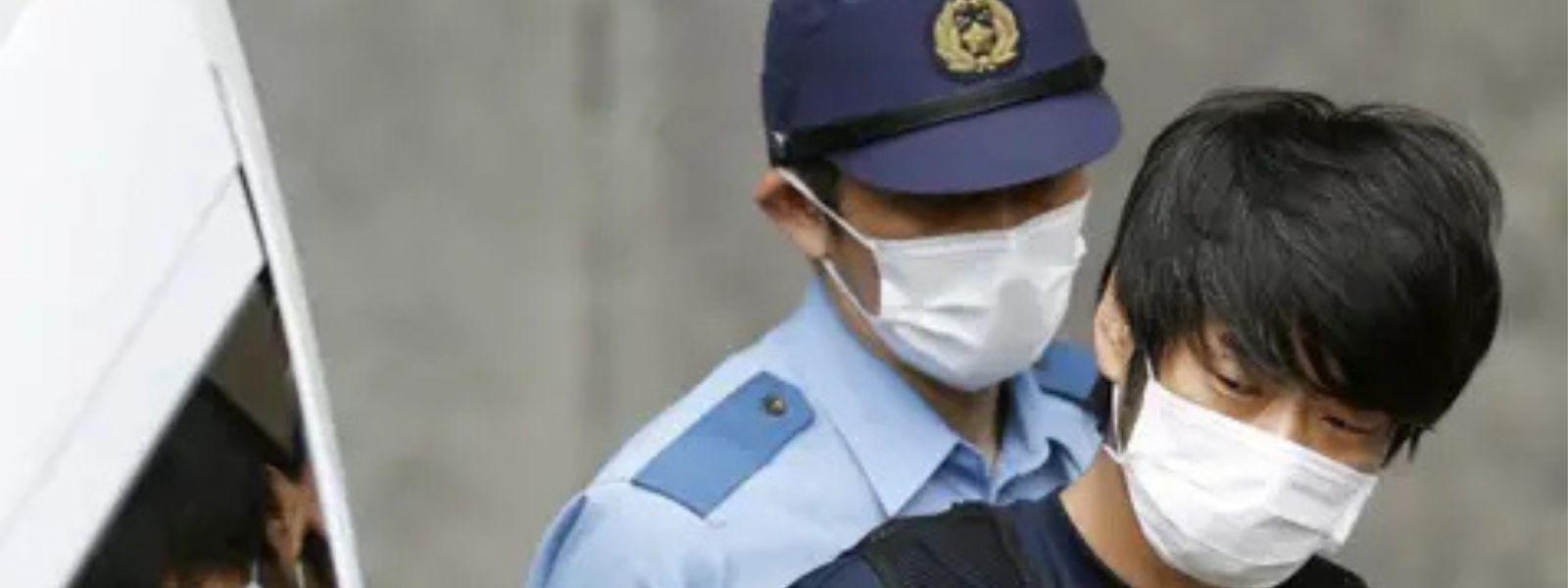
Shinzo Abe's Assassin Gets Life Sentence



.png )
(JT) The man who assassinated former Prime Minister Shinzo Abe was sentenced to life in prison on Wednesday, 3½ years after the shooting in Nara in broad daylight that sent shockwaves across the world.
The Nara District Court’s ruling on Tetsuya Yamagami, 45, who shot Abe with a homemade gun in July 2022, was in line with the sentence that prosecutors had demanded.
The verdict concludes the trial of Yamagami over the killing of the former prime minister during the influential politician's campaign rally in Nara. At the onset of the trial, which started in late October, Yamagami pleaded guilty to murder and other charges, including the production of gunpowder and property damage.
In the lay judge trial, Yamagami told the court that his mother’s blind faith in the Unification Church and her endless donations to it had destroyed his family and made him want to target the former prime minister, whom he regarded as an ally of the group.
As presiding Judge Shinichi Tanaka read out the sentence, Yamagami sat still, showing little emotion and looking downward.
Tanaka said that while the defendant experienced a series of tragic events in his life, they did not constitute grounds for leniency.
“The shooting was despicable and extremely malicious,” he said. “We cannot acknowledge the influence of his upbringing (in sentencing). He was already in his 40s, an independent person aware of social norms. He was capable of (understanding) the anti-social nature of taking someone else’s life.”
The assassination of Japan’s longest-serving prime minister in a country where gun crimes are extremely rare not only shocked the world but also set off intense criticism of the financial and psychological exploitation of followers by religious groups and lawmakers’ ties to such groups.
Yamagami told the court that he felt “despair and a sense of crisis” by Abe’s connections to the church, formally called the Family Federation for World Peace and Unification, after watching him contribute a congratulatory video message to a church-affiliated group in 2021.
Following two failed attempts at attacking senior members of the church with a knife and Molotov cocktails in 2018 and 2019, he started making guns himself in 2020. At this point his target was top church leaders, not the former prime minister.
Yamagami said he changed his target to Abe only days before the shooting, realizing that senior church members were not coming to Japan amid COVID-19 travel restrictions. His own financial crisis, having resigned from his job and racked up debt, also propelled him toward the attack on Abe.
A focal point of the trial was how much weight should be put on his troubled upbringing and the hardships caused by his mother’s longtime devotion to the church during sentencing.
As part of its efforts to seek leniency, the defense team aimed to establish, through its questioning of the defendant and court testimony of a religious scholar, that he is a victim of religious abuse due to his mother’s extreme faith in the church.
Prosecutors, meanwhile, focused on the cruel and premeditated nature of the killing, which saw him assembling a total of 10 shotguns in a Nara apartment and repeated firing tests in the mountains of Nara before the attack.
The prosecution also maintained that Yamagami was in his 40s at the time of the attack and, therefore, was well aware of laws and social norms.
In their closing argument in December, prosecutors stressed that the use of force to seek revenge against a particular group or address social injustice should never be condoned, noting that the defendant used Abe as “a mere tool” to inflict damage on the Unification Church.
Other Articles
-824027_550x300.png)


-823812_550x300.jpg)




Featured News
-822734_550x300.jpg)
-822716_550x300.jpg)
-822495_550x300.jpg)
-819380_550x300.jpg)

News 1st, MTV Channel (Pvt) Ltd, MBC Networks (Pvt) Ltd, 45/3, Braybrooke Street, Colombo-02.
T.P : +94 114 792 700,
Fax : +94 114 792 733
T.P : +94 114 792 700,
Fax : +94 114 792 733




 |  |  |
|---|---|---|
 |  |  |
 |  |  |
 |

.gif)