.webp)


Mahanayake Theros Briefed on Prison Guidelines for Clergy



.png )
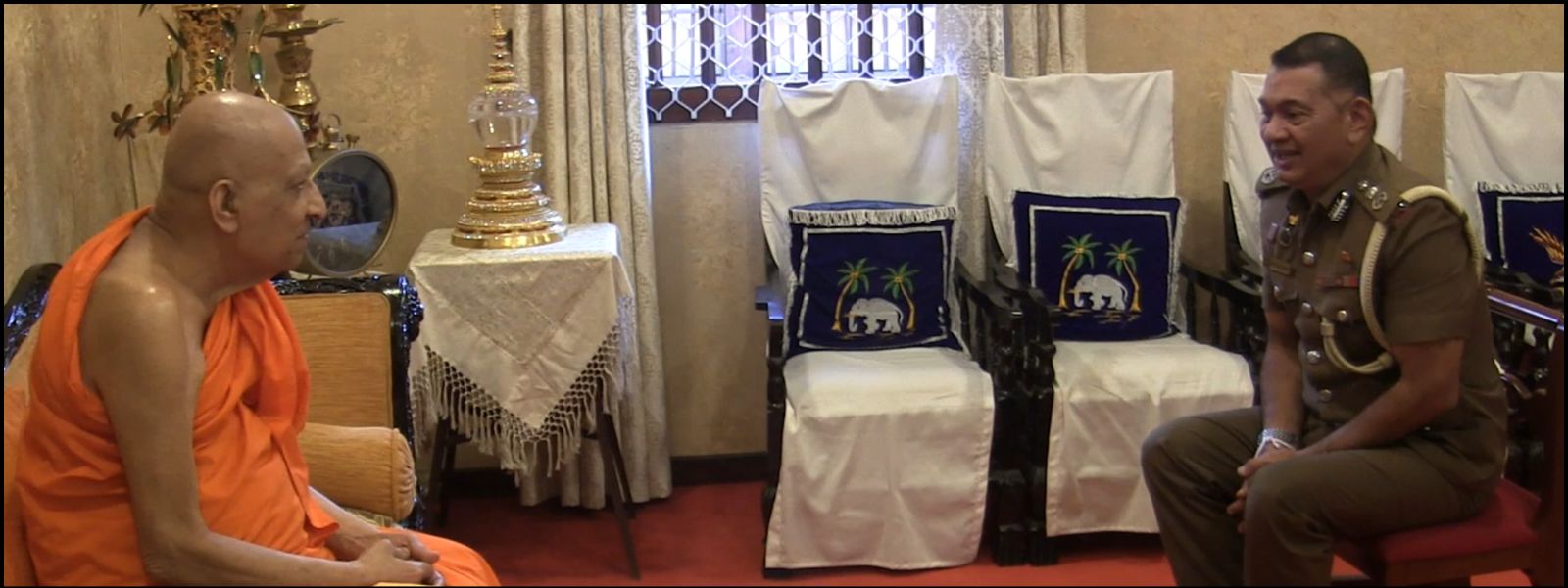
COLOMBO (News 1st); Officials of the Department of Prisons briefed Sri Lanka's senior Buddhist clergy on proposed amendments to regulations and standing orders made under the Prisons Ordinance, including new provisions relating to the treatment of members of the Maha Sangha and other religious leaders who are remanded or imprisoned.
A delegation led by Prison Commissioner and Spokesman Senaka Palletenne first met the Most Venerable Warakagoda Gnanarathana Thero, Mahanayake of the Asgiri Chapter of the Siam Nikaya (Sect), before proceeding to the Malwathu Maha Viharaya to meet the Most Venerable Thibbatuwawe Sri Sumangala Thero, Mahanayake of the Malwathu Chapter of the Siam Nikaya (Sect).
During the meeting, Prison Commissioner Senaka Palliatenne explained the proposed revisions to prison regulations and standing orders.
He said that under the existing framework, the Department of Prisons had acted in accordance with the provisions of the Prisons Ordinance currently in force. However, with the amended regulations expected to be gazetted, a new procedure would be introduced for members of the clergy who enter the prison system.
According to Palliatenne, under the proposed regulations, a period of ten days would be granted when a monk is admitted to prison, allowing the relevant religious authorities time to consider the circumstances surrounding the case and determine any action they wish to take. Only after that process would prison authorities proceed with further action.
He further stated that, at present, whenever a member of the Maha Sangha is transported outside prison premises for any official purpose, including court appearances, they are taken while wearing their robes.
During the discussion, Most Venerable Thibbatuwawe Sri Sumangala Thero asked whether a separate arrangement could be established for monks who are taken into custody.
Responding to the inquiry, Palliatenne said the suggestion would be conveyed to the relevant minister. He added that a separate section, commonly referred to as the "Temple Ward", currently exists within the prison system and that monks are housed there. He also noted that members of the Maha Sangha are afforded special consideration beyond that given to ordinary prisoners.
The Mahanayake Thero then questioned whether monks could be produced before court wearing their robes rather than prison attire.
Palliatenne replied that monks would be produced before court wearing their robes.
When asked about their status while remaining inside prison, the Prison Commissioner explained that monks are currently permitted to remain in robes for a period of ten days. During that time, the relevant Mahanayake Thero and the Secretary to the Ministry of Buddhasasana would be informed, and subsequent action would be taken based on the guidance received from those authorities.
The Mahanayake Thero observed that a timely decision-making process was necessary to avoid creating difficulties for all parties concerned.
Asked how members of the clergy would be treated under the revised regulations, Palliatenne said the new rules would apply equally to all religious leaders regardless of faith. He stated that if a member of the clergy or a religious leader is taken outside prison premises, arrangements would be made for that individual to wear robes or the official religious attire associated with their faith.
When questioned about how such individuals would be treated while inside prison, he said the relevant Sangha authority and the Commissioner General of Buddhist Affairs would be notified and that prison authorities would act in accordance with the guidance received.
Responding to a question regarding reports that approximately 28 Buddhist monks are currently in custody in connection with allegations including sexual offences and child abuse, Palliatenne stated that the same regulations would apply to them as well.
Other Articles
-859250_550x300.jpg)
-859244_550x300.jpg)





Featured News




News 1st, MTV Channel (Pvt) Ltd, MBC Networks (Pvt) Ltd, 45/3, Braybrooke Street, Colombo-02.
T.P : +94 114 792 700,
Fax : +94 114 792 733
T.P : +94 114 792 700,
Fax : +94 114 792 733




 |  |  |
|---|---|---|
 |  |  |
 |  |  |
 |

.gif)