.webp)


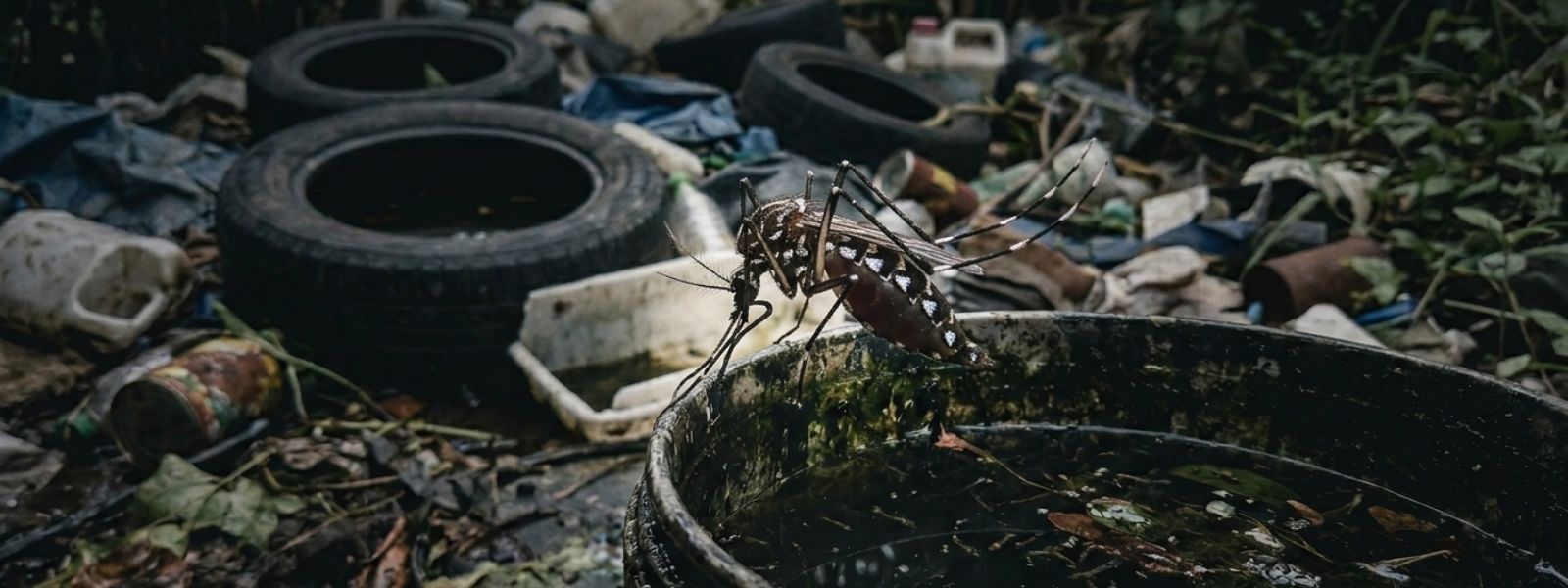
Aggressive Dengue Crackdown as Cases Surge Nationwide



.png )
COLOMBO (News 1st): Sri Lanka’s large-scale special mosquito control programme entered its second day today, as health authorities intensified efforts to curb the rapidly rising dengue threat across the island.
Public Health Inspectors have been granted authority to carry out inspections nationwide to identify and eliminate mosquito breeding sites, in a major push to contain the spread of dengue.
Secretary to the Ministry of Health, Specialist Dr. Anil Jasinghe, stated that all Medical Officer of Health offices have been formally notified to support and coordinate the operation.
All Public Health Inspectors are expected to contribute at a technical level to strengthen dengue control measures, with authorities adopting a more comprehensive and data-driven approach.
For the first time in Sri Lanka, a coordinated system at the rural level is being implemented to both combat dengue and collect critical information, with the active participation of Grama Niladhari officers, Family Health Service Officers, and Community Empowerment Committees.
The programme also focuses on gathering detailed data on dengue patients and high-risk areas at the village level, enabling faster response and targeted interventions.
According to Director of the National Dengue Control Unit, Dr. Kapila Kannangara, these operations are being carried out across all villages in the country.
Meanwhile, a special operations centre has been established by the Government Information Department to assist in dengue prevention, control, reporting of mosquito breeding sites, and public guidance.
The centre can be contacted via 011 7966366 from Monday to Friday between 8:00 a.m. and 8:00 p.m., and on Saturdays from 8:00 a.m. to 12:00 noon.
Authorities revealed that 47 complaints were received on the first day alone, with the majority relating to environments where mosquito larvae were found. Officials say this highlights both heightened public awareness and the growing prevalence of potential breeding grounds.
Statistical data over recent months indicates a sharp increase in dengue infections.
In January, 7,866 cases were reported, followed by a slight decline to 5,721 cases in February.
However, figures began rising again from March, which recorded 6,013 infections. By May, the number had surged significantly to 8,590 cases.
Although June has not yet concluded, the number of reported dengue cases has already reached 14,446, a worrying upward trend.
So far this year, the total number of dengue cases reported stands at 48,287, with 29 deaths recorded due to the disease.
Other Articles


-844702_550x300.jpg)






Featured News




News 1st, MTV Channel (Pvt) Ltd, MBC Networks (Pvt) Ltd, 45/3, Braybrooke Street, Colombo-02.
T.P : +94 114 792 700,
Fax : +94 114 792 733
T.P : +94 114 792 700,
Fax : +94 114 792 733




 |  |  |
|---|---|---|
 |  |  |
 |  |  |
 |

.gif)