.webp)


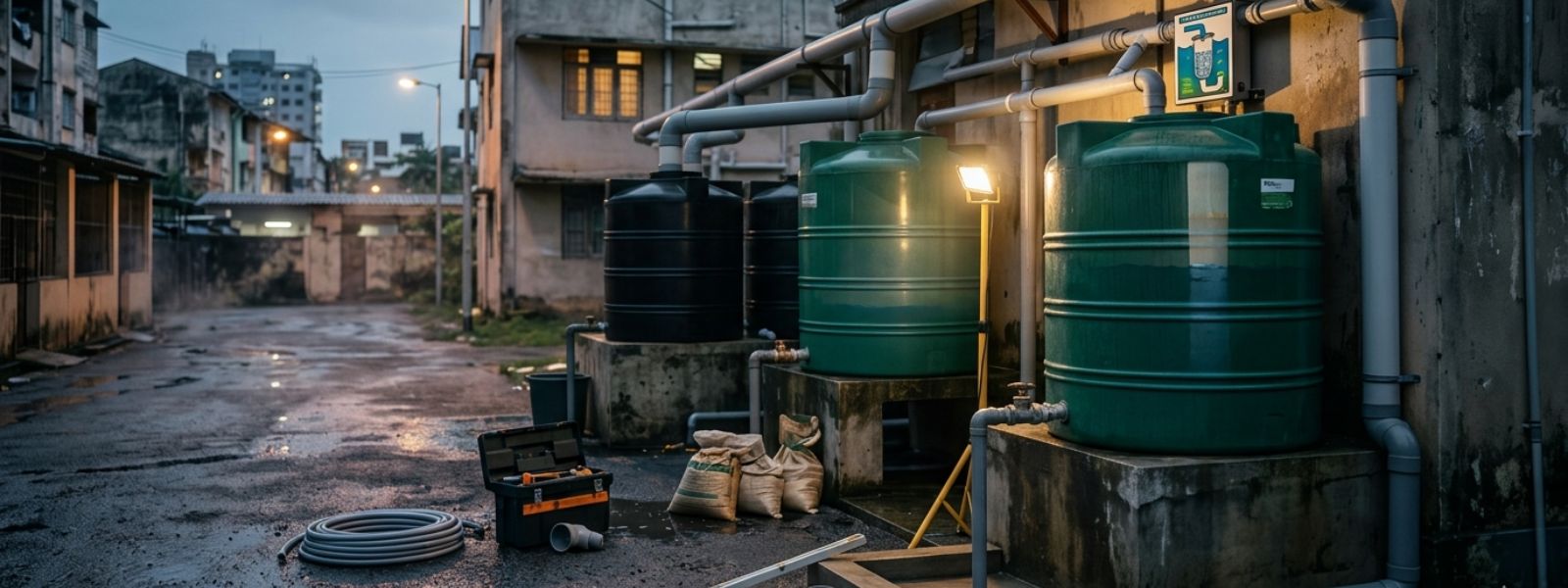
Sri Lanka to Launch Rainwater Harvesting Pilot Project



.png )
COLOMBO (News 1st); Sri Lanka is set to introduce a pilot project focused on rainwater harvesting in a bid to address rising future water demand, Minister of Construction and Water Supply Dr. Susil Ranasinghe announced.
The Minister said the initiative is being planned with a focus on effectively utilising rainwater for non-drinking purposes such as garden landscaping and vehicle washing.
Dr. Ranasinghe highlighted concerns over the sustainability of water supply in the coming years. He noted that within the National Water Supply and Drainage Board’s Western Region alone, there are approximately 1.3 million consumers. He questioned whether, within the next decade, the Water Board would have the capacity to treat and supply sufficient volumes of water to meet growing demand, and whether adequate water resources would remain available in the Kelani River to support this need.
The Minister pointed out that Colombo receives rainfall throughout most of the year, aside from brief dry periods. He stressed the importance of capturing and utilising this rainwater across households, government institutions, and other environments for practical uses.
As part of the initial phase, the government intends to establish rainwater harvesting systems equipped with advanced engineering technology in at least 100 state institutions within the Colombo District. He said this effort is also aimed at sending a broader message to the public on the importance of water conservation.
Dr. Ranasinghe encouraged households to adopt similar practices by installing rainwater collection systems, such as underground or surface tanks, to store and use rainwater for domestic purposes including garden maintenance and vehicle washing.
He outlined several key benefits of the initiative, noting that it would help reduce the volume of water that needs to be treated by the National Water Supply and Drainage Board.
Additionally, households that adopt rainwater harvesting systems would see a reduction in their water bills while gaining the flexibility to use water according to their needs.
Other Articles








Featured News


-849213_550x300.jpg)

-848028_550x300.jpg)
News 1st, MTV Channel (Pvt) Ltd, MBC Networks (Pvt) Ltd, 45/3, Braybrooke Street, Colombo-02.
T.P : +94 114 792 700,
Fax : +94 114 792 733
T.P : +94 114 792 700,
Fax : +94 114 792 733




 |  |  |
|---|---|---|
 |  |  |
 |  |  |
 |

.gif)