.webp)


Sri Lanka, South Korea Formalise USD 267 Million Debt Restructuring Deal



.png )
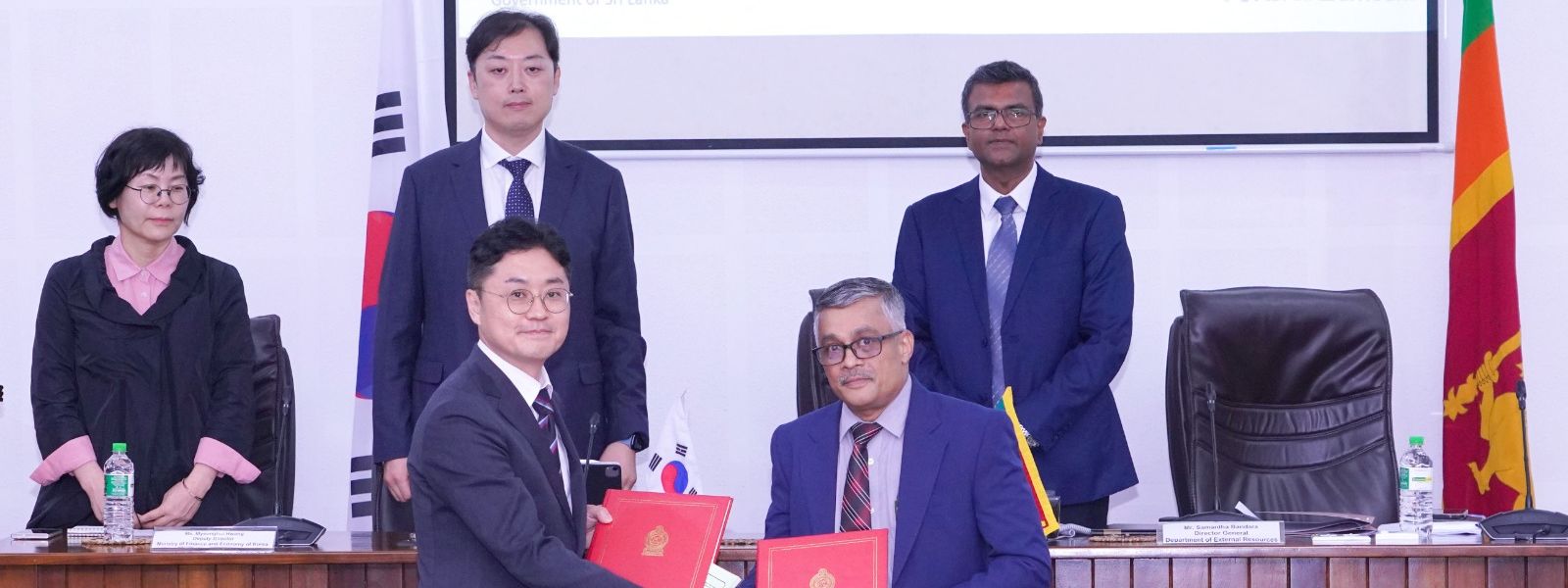
COLOMBO (News 1st); Sri Lanka and the Republic of Korea have formally exchanged signed Debt Restructuring Amendment Agreements covering 18 Economic Development Cooperation Fund (EDCF) loans with a total value of approximately USD 267 million.
The exchange of agreements took place during the 2026 EDCF Policy Dialogue held on April 28, 2026, at the Ministry of Finance, Planning and Economic Development.
The dialogue served as a high-level platform to review ongoing cooperation, address debt-related adjustments, and chart the future direction of Korean-funded development assistance to Sri Lanka.
The debt restructuring agreements reflect the administrative completion of measures agreed upon under Sri Lanka’s broader debt restructuring process, reaffirming Korea’s continued support while adapting to the country’s current economic framework.
During the dialogue, Sri Lankan officials made presentations on the National Development Plan and the status of debt restructuring. These were delivered by the Department of National Planning and the Department of External Resources. In response, the Korean side outlined the Republic of Korea’s Framework Plan for International Development for the period 2026 to 2030, as well as its mid-term operational direction, providing insight into how future Korean development assistance will align with Sri Lanka’s national priorities.
Discussions also focused on the progress of several major projects currently financed through EDCF loans.
Another key item on the agenda was the proposed extension of the EDCF Framework Arrangement signed in 2018, which establishes the basis for concessional financing from Korea to Sri Lanka.
The Korean delegation was led by officials from the Ministry of Economy and Finance, including Byoungseok Choi and Myeonghui Hwang, together with a delegation from the Export-Import Bank of Korea headed by Director Daehee Kim. The Sri Lankan delegation was led by Dr. Harshana Suriyapperuma, Secretary to the Ministry of Finance, Planning and Economic Development, and included senior officials from the ministry, line ministries, and project executing agencies.
Other Articles










Featured News

-835300_550x300.jpg)



News 1st, MTV Channel (Pvt) Ltd, MBC Networks (Pvt) Ltd, 45/3, Braybrooke Street, Colombo-02.
T.P : +94 114 792 700,
Fax : +94 114 792 733
T.P : +94 114 792 700,
Fax : +94 114 792 733




 |  |  |
|---|---|---|
 |  |  |
 |  |  |
 |

.gif)