.webp)


Education Reform to End Textbook Tyranny



.png )
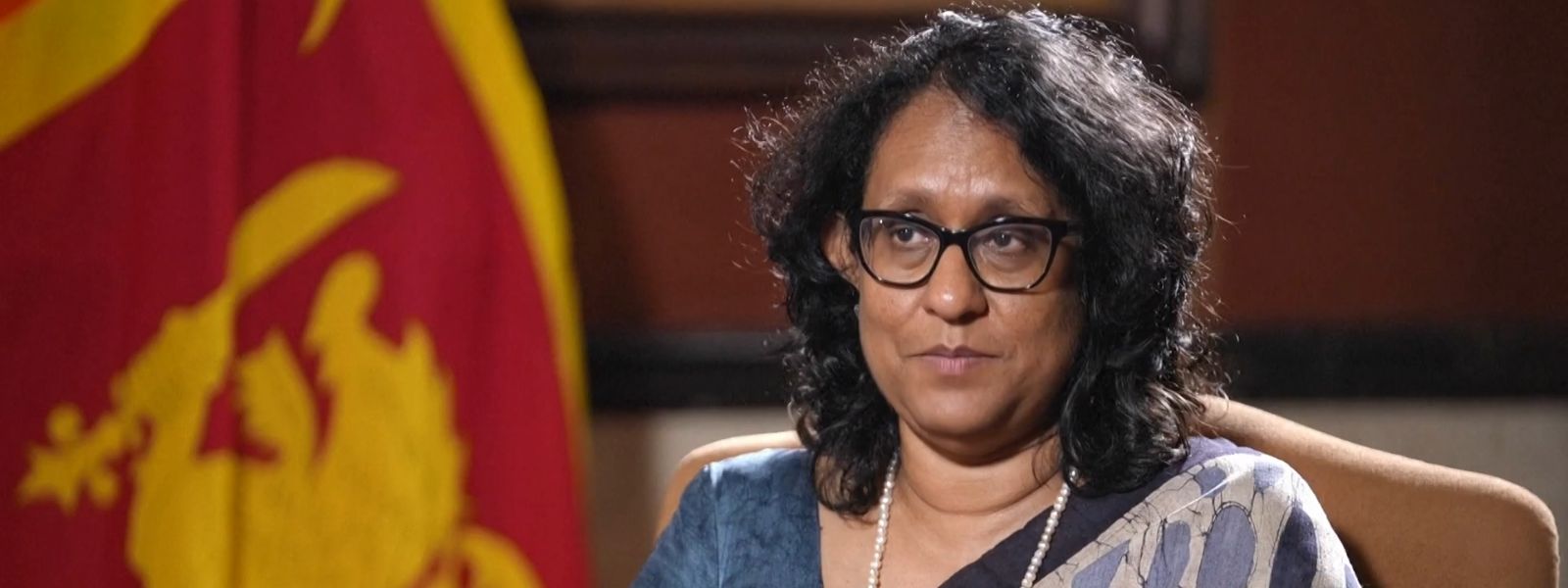
COLOMBO (News 1st); Sri Lanka has launched one of its most ambitious education reforms in decades, with Prime Minister Harini Amarasuriya declaring that the government is ready to “build a truly student‑centered education system” that prioritizes joy, curiosity, and holistic development over rote learning and relentless competition.
Addressing the nation at the unveiling of the new framework, the Prime Minister acknowledged a hard truth: the country’s excessively competitive, textbook‑driven system has long failed thousands of students.
While academically strong children continued to rise through the ranks, many others quietly slipped away,lost to an education model that rewarded memory over meaning and pressure over passion.
“For decades, our education system has been highly competitive and narrowly focused on textbook-based knowledge,” she said. “As a result, we have been unable to prevent many children from dropping out. While some talented students continue to move forward, we lose many others at every stage.”
Amarasuriya described the moment as a national turning point, an opportunity not merely for curriculum reform, but for a complete restructuring of the education ecosystem.
The new system will be guided by five core pillars:
Education Structure
Curriculum Development
Human Resource Development
Infrastructure Development
Evaluation, Assessment & Public Dialogue
Together, these elements aim to shift the country away from its long‑standing teacher‑centered approach toward a vibrant, student‑centered model that prioritizes activity‑based learning, creativity, social skills, and emotional wellbeing.
In one of the reform’s most symbolic moves, the government has committed to reducing the physical and emotional burden carried by children, starting with the weight of their school bags.
“It is not only the weight of the school bag, but also its contents, that have become a burden,” the Prime Minister emphasized, noting that this pressure often extends beyond students to parents, especially mothers who navigate the academic load alongside their children.
The new approach seeks to dismantle this culture of anxiety and replace it with an environment where learning is meaningful, engaging, and pressure‑free.
Other Articles








Featured News

-822734_550x300.jpg)
-822716_550x300.jpg)
-822495_550x300.jpg)
-819380_550x300.jpg)
News 1st, MTV Channel (Pvt) Ltd, MBC Networks (Pvt) Ltd, 45/3, Braybrooke Street, Colombo-02.
T.P : +94 114 792 700,
Fax : +94 114 792 733
T.P : +94 114 792 700,
Fax : +94 114 792 733




 |  |  |
|---|---|---|
 |  |  |
 |  |  |
 |

.gif)