


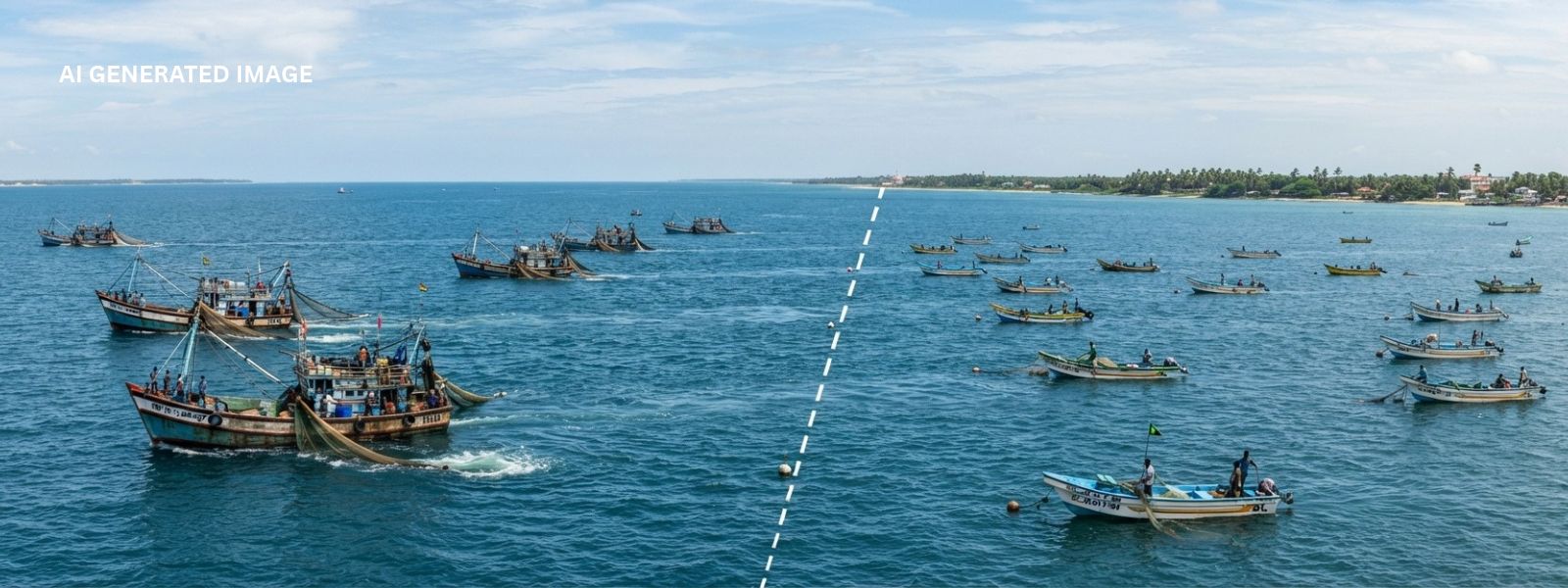
January 22 Talks in New Delhi Aim to End India-Sri Lanka Fisheries Row



.png )
COLOMBO (News 1st); For decades, the narrow stretch of sea separating Sri Lanka and India has been a lifeline for fishing communities and a source of recurring tension between the two neighbours.
On January 22, Sri Lanka and India will return to the negotiating table in New Delhi, hoping to turn years of disputes into a lasting agreement.
Minister of Fisheries, Aquatic and Ocean Resources Ramalingam Chandrasekar announced that a high-level round of bilateral discussions between Sri Lanka and India will be held in the Indian capital as part of efforts to permanently resolve the long-running fisheries dispute.
The talks will take place under the framework of the India–Sri Lanka Joint Working Group on Fisheries, bringing together senior officials from both countries to address some of the most contentious issues affecting fishermen on either side of the Palk Strait.
According to the Minister, the Sri Lankan Government is approaching the negotiations with a clear objective: securing a practical and durable solution that protects local fishing communities while preserving strong bilateral relations with India.
A Sri Lankan delegation headed by the Secretary to the Ministry of Fisheries, Aquatic and Ocean Resources is expected to participate in the discussions with officials from India's Ministry of Fisheries and other key institutions.
Among the major issues expected to dominate the agenda are the entry of Tamil Nadu fishing vessels into Sri Lankan territorial waters also known as the Sea of Sri Lanka, the continued use of banned bottom-trawling methods and the environmental damage caused by such practices.
Sri Lankan authorities have repeatedly raised concerns that bottom trawling is destroying marine habitats and threatening the livelihoods of local fishermen who depend on sustainable fishing grounds.
The delegation will include representatives from the Ministry of Fisheries, the Department of Fisheries and Aquatic Resources, the Sri Lanka Navy, the Sri Lanka Coast Guard, the Sri Lanka Police, the National Aquatic Resources Research and Development Agency (NARA), the Attorney General's Department and the Ministry of Foreign Affairs.
Minister Chandrasekar said the participation of all relevant state agencies would allow Sri Lanka to present a coordinated position while examining every dimension of the issue, from marine conservation and national security to the economic wellbeing of fishing communities.
The upcoming meeting follows an earlier session of the Joint Working Group held in Sri Lanka in late 2024, attended by a senior Indian delegation led by officials from India's Ministry of Fisheries and representatives of the Indian Navy.
Expressing optimism about the outcome, Chandrasekar said he was confident Sri Lanka would receive constructive support from Indian Prime Minister Narendra Modi, Indian External Affairs Minister Dr. Subrahmanyam Jaishankar and stakeholders within the Tamil Nadu administration as efforts continue to find common ground.
Other Articles

-863495_550x300.jpg)






Featured News




News 1st, MTV Channel (Pvt) Ltd, MBC Networks (Pvt) Ltd, 45/3, Braybrooke Street, Colombo-02.
T.P : +94 114 792 700,
Fax : +94 114 792 733
T.P : +94 114 792 700,
Fax : +94 114 792 733




 |  |  |
|---|---|---|
 |  |  |
 |  |  |
 |

