.webp)


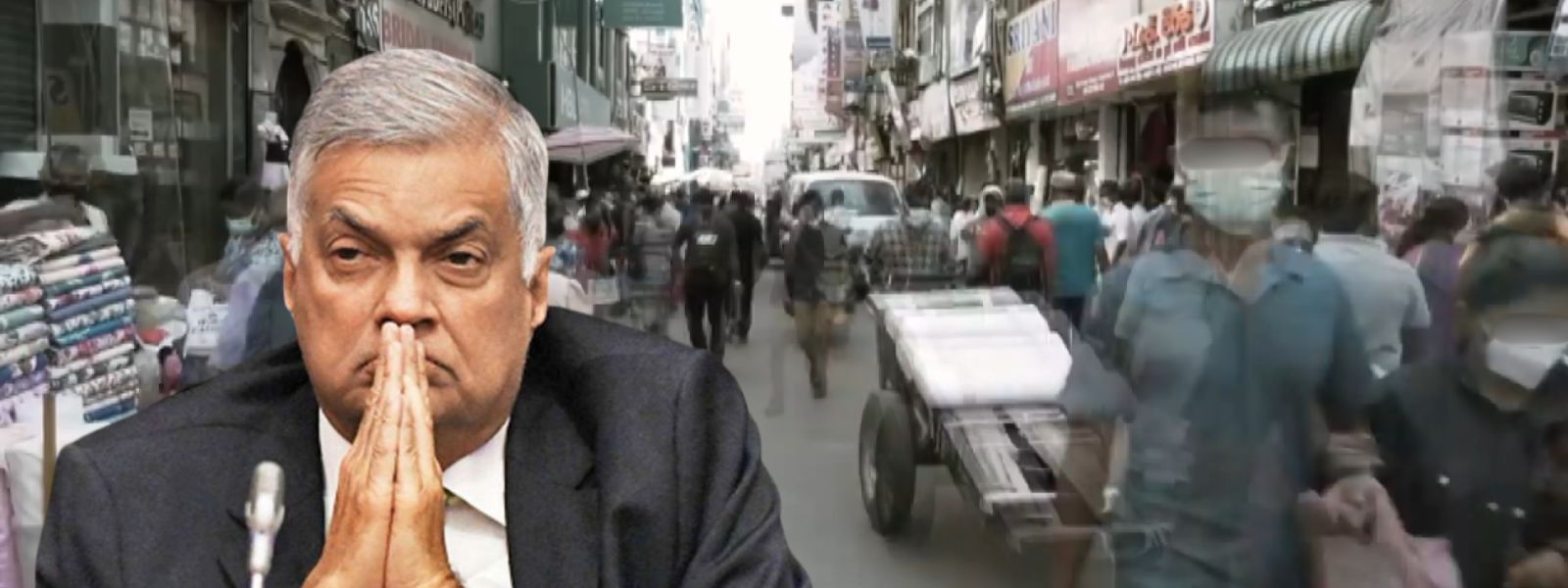
Is Ranil Predicting a Crisis or Deflecting Attention From His Own Record?



.png )
COLOMBO (News 1st); Former President Ranil Wickremesinghe has warned that Sri Lanka could face serious challenges in meeting its foreign debt obligations after 2028, arguing that the country's ability to build sufficient foreign reserves remains one of the most pressing economic issues facing the nation.
Speaking on August 18, Wickremesinghe recalled that Sri Lanka (under his presidency)had successfully negotiated with creditors to postpone debt repayments until 2028, but stressed that those obligations would eventually have to be settled.
According to the former President, the country is expected to maintain foreign reserves of approximately USD 14.7 billion to USD 15 billion, while current reserves remain significantly below that level. He noted that even if the Central Bank succeeds in achieving its target of USD 8 billion in reserves by the end of this year, Sri Lanka would still need to find a further USD 6 billion to reach the desired level.
Wickremesinghe questioned how the country intends to bridge that gap while simultaneously meeting debt repayment obligations estimated at between USD 2 billion and USD 3 billion and raising additional funding through international bond issuances.
He also raised concerns about what happens after the current International Monetary Fund programme concludes at the end of March 2027, questioning whether Sri Lanka intends to enter into another IMF arrangement or pursue an alternative economic path.
Maintaining that debt repayment remains the country's most important challenge, Wickremesinghe argued that national attention should focus on how Sri Lanka plans to meet its future obligations rather than on constitutional debates or political reforms. He warned that failure to repay external debt could once again push the country into bankruptcy and questioned where the required financing would come from. The suggestion that Sri Lanka may once again face bankruptcy is not a new position from Ranil Wickremesinghe.
For a considerable period, Wickremesinghe's expectation was that an economic collapse would eventually pave the way for his return to power.
It was under such circumstances that Wickremesinghe became President on 21 July 2022.
At a time when people had taken to the streets demanding the removal of the country's leaders, Wickremesinghe entered Parliament through a National List seat and was subsequently elected President without directly securing a public mandate.
Before Sri Lanka formally announced on 12 April 2022 that it was suspending foreign debt repayments, there had been ample opportunities for Wickremesinghe to assist the country.
Based on claims frequently made by Wickremesinghe and those around him about his international connections and relationships with world leaders and institutions, he could have intervened to help the country and its people avoid economic collapse.
Several individuals concerned about the country's future directly appealed to Wickremesinghe to assist Sri Lanka before the economic crisis deepened.
They claim that his response at the time was: "Let it fall a little more."
Evidence exists to substantiate those remarks.
What, then, did Ranil Wickremesinghe do after assuming power following the country's economic collapse?
By the time Sri Lanka announced the suspension of debt repayments on 12 April 2022, Central Bank Governor Dr. Nandalal Weerasinghe and Treasury Secretary Mahinda Siriwardana had already initiated key measures aimed at steering the economy back onto a stable path.
After assuming office, Wickremesinghe's primary action was to place further burdens on the public.
The cost of tax concessions previously granted to close associates was ultimately borne by ordinary citizens.
The long delay in increasing fuel and electricity prices for political reasons resulted in a sudden and heavy burden being imposed on the public when those adjustments eventually became unavoidable.
The prices of essential goods rose sharply.
The burden fell on the people.
Despite the hardship, citizens endured these difficulties with the belief that their sacrifices would help rebuild the country.
What did Wickremesinghe actually do after assuming power while the public continued to bear that burden.
A two-day trip to the United Kingdom that reportedly cost Rs. 16.6 million in public funds.
Wickremesinghe attended events relating to paying final respects to Queen Elizabeth II and later extended congratulations to King Charles III during his coronation.
Between 2022 and 2024, Wickremesinghe undertook 24 foreign visits, accompanied by a total of 324 individuals.
According to figures cited, these overseas trips cost the State Rs. 1,007.346 million.
Those figures, are recorded in Parliamentary Hansard.
Did those foreign trips rebuild the country?
Did they rescue the economy?
If the economy had truly been restored and the people had prospered, Wickremesinghe would have secured victory at the 2024 Presidential Election.
Instead, they note that he finished in third place.
He received 17.27% of the vote.
Why, is Ranil Wickremesinghe once again warning that the country could face bankruptcy?
There may be a reason.
A legal case is currently before court regarding the expenditure of Rs. 16.6 million in public funds on the United Kingdom visit that took place while Sri Lankans were enduring severe economic hardship.
When the case was taken up before the Fort Magistrate's Court, both Wickremesinghe's lawyers and the United National Party's media division reportedly maintained that the trip was undertaken following an official invitation.
In August 2025, the UNP media division publicly released what it described as a letter from the University of Wolverhampton and stated in an official announcement that the visit had been made on an official invitation.
On April 29, 2026, President's Counsel Tilak Marapana told court that allegations regarding the expenditure required closer examination and disputed claims relating to accommodation, transport and meal costs. He stated that vehicles had been provided by the British Government, that his client had not used them, and argued that the reported costs appeared excessive.
The issue has received renewed attention following reports that information published on the United Kingdom Government website listing official visits by foreign heads of state did not include an official visit by Ranil Wickremesinghe on September 22 and 23, 2023.
That development has prompted fresh questions from over whether the nature of the visit was accurately represented to the public and the courts.
Against that backdrop, Wickremesinghe's latest warning that Sri Lanka could once again face bankruptcy has become the subject of increasing political debate, while critics claim the remarks coincide with growing scrutiny over his own record in office.
Other Articles


-851603_550x300.jpg)





Featured News


-849213_550x300.jpg)
-848028_550x300.jpg)
News 1st, MTV Channel (Pvt) Ltd, MBC Networks (Pvt) Ltd, 45/3, Braybrooke Street, Colombo-02.
T.P : +94 114 792 700,
Fax : +94 114 792 733
T.P : +94 114 792 700,
Fax : +94 114 792 733




 |  |  |
|---|---|---|
 |  |  |
 |  |  |
 |

.gif)