.webp)


'Now Is the Time to Invest in Sri Lanka' - CBSL Govenor



.png )
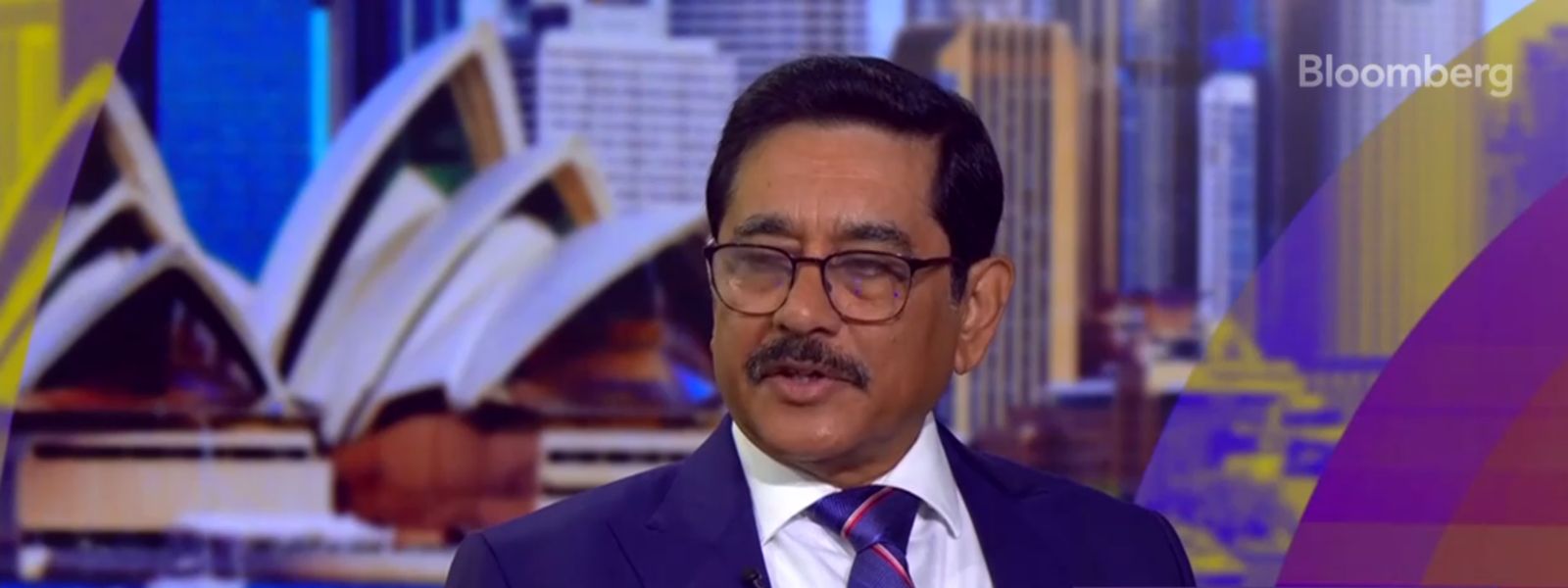
COLOMBO (News 1st); Central Bank Governor Dr. Nandalal Weerasinghe has expressed confidence in Sri Lanka’s economic outlook, stating that the country is on a steady recovery path and presents attractive opportunities for investors despite ongoing global economic uncertainties and energy market volatility.
Speaking to Bloomberg on the sidelines of the Invest Sri Lanka events held in Sydney and Melbourne, Australia, Dr. Weerasinghe said the economy has recovered strongly following the country's economic crisis and is currently recording growth of around five percent.
He noted that Sri Lanka has successfully navigated several external shocks, including tensions in the Middle East and adverse weather conditions caused by cyclonic activity, while maintaining economic stability.
According to the Governor, the economy is now moving towards a higher growth trajectory, creating favorable conditions for both local and foreign investors.
“For anyone to benefit from the steady growth Sri Lanka has witnessed over the last three years and is expected to record over the next few years, this is the time to invest in Sri Lanka,” he said.
Dr. Weerasinghe highlighted that the stability of the Sri Lankan Rupee, prudent monetary and fiscal policies, and increasing confidence in private-sector-led growth have improved the country's investment climate.
Addressing concerns regarding rising energy costs, the Governor acknowledged that Sri Lanka remains particularly vulnerable to global oil price shocks as a net importer of energy.
He explained that while Sri Lanka benefits from renewable energy sources such as hydro, wind and solar power, the country still relies significantly on thermal power generation and imported fuel for transportation.
As a result, rising global oil prices have had a direct impact on domestic inflation.
Dr. Weerasinghe noted that inflation, which was running at around two percent until March, increased sharply following the implementation of cost-reflective fuel pricing policies, reaching approximately seven percent, near the upper limit of the Central Bank's target range.
He stressed that energy and transportation carry significant weight in Sri Lanka's consumer price basket, making the economy highly exposed to fluctuations in international fuel markets.
The Governor said the Central Bank's baseline projection assumes global oil prices will remain around US$80 per barrel through the remainder of this year and into next year.
“If oil prices remain around that level, we can manage the situation,” he said, adding that unexpected developments in global energy markets could create fresh challenges.
Despite recent inflationary pressures, Dr. Weerasinghe reiterated the Central Bank’s expectation that inflation will return to its target of around five percent towards the end of this year or early next year.
Responding to questions regarding whether monetary policy is sufficiently restrictive, he defended the Central Bank’s decision to raise interest rates by 100 basis points in May, describing the move as a proactive and decisive step to contain inflation expectations, moderate rapid credit growth and prevent prolonged inflationary pressures from elevated oil prices.
He stated that the impact of these measures is already becoming visible, with credit growth beginning to slow and the Rupee stabilizing after coming under pressure in April and May due to elevated fuel import costs.
The Governor also pointed to policy measures introduced by the Government and the Central Bank, including restrictions and macroprudential measures affecting vehicle imports and loan-to-value ratios, which he said are helping reduce import-related pressures on the economy.
Meanwhile, commenting on Sri Lanka’s International Monetary Fund programme, Dr. Weerasinghe said the country has successfully completed both the fourth and fifth reviews under the IMF-supported Extended Fund Facility arrangement.
He said the next review is expected to take place in November or December and expressed confidence that it would also be completed successfully.
According to the Governor, Sri Lanka remains on track to fully complete the four-year IMF programme during the second half of next year.
Dr. Weerasinghe further noted that the IMF has recognized Sri Lanka as one of its notable success stories, highlighting the role of the programme in restoring macroeconomic stability and laying the groundwork for sustainable medium and long-term economic growth.
Other Articles









Featured News


-849213_550x300.jpg)

-848028_550x300.jpg)
News 1st, MTV Channel (Pvt) Ltd, MBC Networks (Pvt) Ltd, 45/3, Braybrooke Street, Colombo-02.
T.P : +94 114 792 700,
Fax : +94 114 792 733
T.P : +94 114 792 700,
Fax : +94 114 792 733




 |  |  |
|---|---|---|
 |  |  |
 |  |  |
 |

.gif)