.webp)


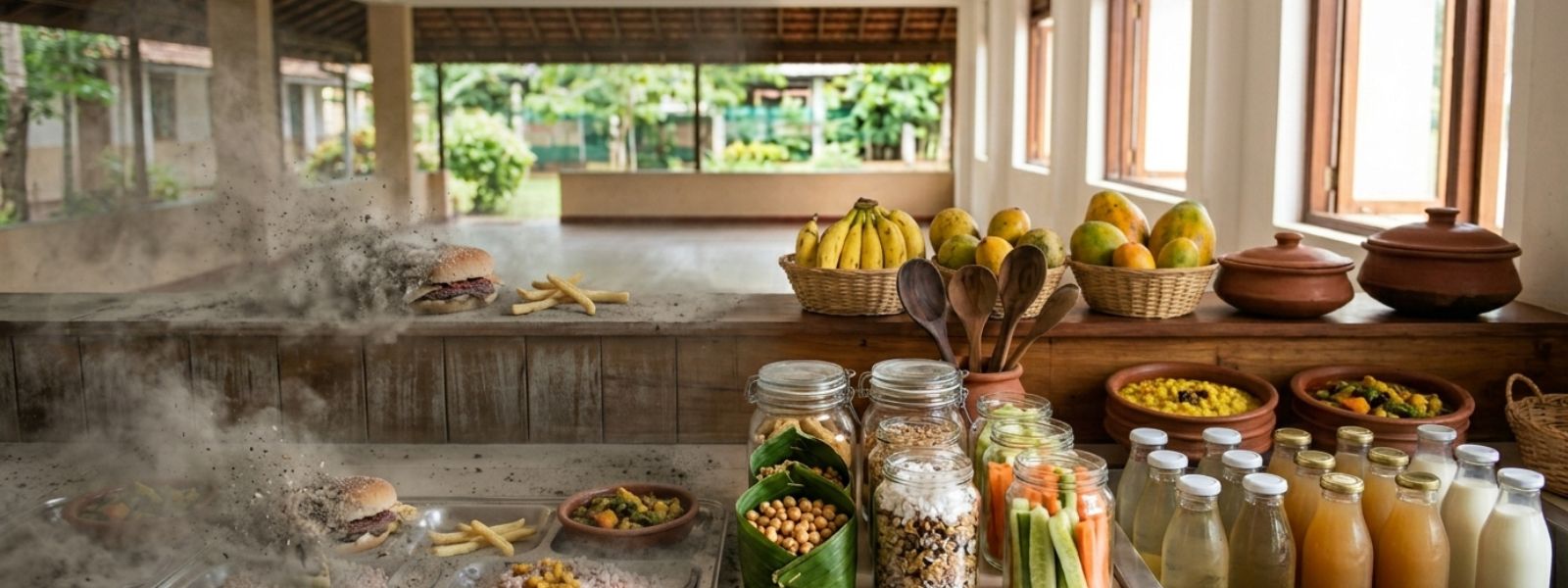
Sri Lanka Is Banning Junk Food In Schools - Here's Why!



.png )
COLOMBO (News 1st); Sri Lanka has officially introduced a comprehensive set of guidelines aimed at transforming school canteens into healthier environments, with a sweeping ban on several categories of unhealthy food, in a move designed to combat rising nutrition-related health issues among children.
The “Healthy School Canteen Guidelines” were launched today (22) at a ceremony held at the Colombo Faculty of Medicine auditorium under the patronage of Health and Mass Media Minister Dr. Nalinda Jayatissa.
The initiative marks a major policy shift in the country’s efforts to improve child nutrition and promote long-term public health.
Under the new guidelines, the sale and promotion of food items falling under five key categories have been strictly prohibited in school canteens.
These include foods containing unhealthy fats, items high in salt and artificial flavourings, sugar-laden products, calorie-dense foods with low nutritional value, and ultra-processed food items.
Health authorities emphasised that the primary driver behind the decision is the growing concern over the nutritional status of schoolchildren, which directly impacts their physical growth, mental development, and academic performance.
Poor dietary habits, they warned, not only hinder educational outcomes but also contribute to conditions such as stunting, wasting, underweight, overweight, obesity, and micronutrient deficiencies. (Wasting refers to a child who is too thin for his or her height. Wasting is the result of recent rapid weight loss or the failure to gain weight: UNICEF)
Data from the 2025 National Nutrition Month revealed concerning trends among children in Sri Lanka, with 10.1% recorded as stunted, 8.6% wasted, 16.1% underweight, and 0.57% either overweight or obese. Officials noted that these figures highlight a pressing need for urgent intervention.
Further insight into children’s eating habits shows a widespread preference for unhealthy options.
Experts disclosed that 17.4% of children between the ages of 13 and 17 consume carbonated beverages daily, while 28.5% regularly consume high-salt foods, 29% consume high-fat foods, and 41% consume foods high in sugar at least once a day or more frequently.
Explaining the risks, Director of the Nutrition Division, Dr. Monika Wijeratne, said that increasing rates of overweight and obesity among children are strongly linked to a higher likelihood of developing non-communicable diseases at a younger age, warning of long-term health consequences if current trends are not addressed.
The guidelines establish four core criteria for maintaining healthy school canteens, including proper infrastructure and sanitation standards, effective management and supervision systems, structured human resource practices, and the provision of safe and nutritious food.
Schools are required to form canteen committees led by principals to oversee food quality and operations, while canteen workers must undergo medical examinations as per recommendations of local health authorities.
A detailed list of prohibited foods has been outlined, including processed meats such as sausages, bacon, and ham, as well as fast foods like burgers, pizzas, hot dogs, and submarine sandwiches.
Sugary products such as cream buns, pastries, cakes, sweets, chocolates, puddings, and ice cream are also banned, along with deep-fried snacks, instant noodles, packaged junk food, flavoured beverages, energy drinks, artificial juices, and carbonated soft drinks. Ultra-processed sauces, seasonings, and instant soups have also been restricted.
Officials clarified that ultra-processed foods refer to products heavily modified with additives, flavour enhancers, and artificial ingredients, which offer little nutritional value and pose health risks when consumed regularly.
Despite concerns from some stakeholders about reduced food choices, authorities stressed that the guidelines include a wide range of recommended meals and snacks. These are categorised into main meals, supplementary snacks, and beverages, with detailed recipes and preparation methods provided to ensure schools can offer balanced, appealing alternatives.
Health Minister Dr. Nalinda Jayatissa acknowledged public concerns but defended the policy as a necessary long-term investment in the nation’s future. He noted that while some schools had raised issues about losing financial support from companies that previously supplied unhealthy food products, the government’s priority remains the wellbeing of children.
“This may seem like a difficult step, but we must think about the future. Are we prioritising short-term convenience, or the health of the next generation who will drive this country forward in the coming decades?” the Minister said, emphasising that the programme targets the health of children who will form the ageing population of Sri Lanka in the years 2070 and beyond.
Other Articles


-844386_550x300.jpg)





Featured News




News 1st, MTV Channel (Pvt) Ltd, MBC Networks (Pvt) Ltd, 45/3, Braybrooke Street, Colombo-02.
T.P : +94 114 792 700,
Fax : +94 114 792 733
T.P : +94 114 792 700,
Fax : +94 114 792 733




 |  |  |
|---|---|---|
 |  |  |
 |  |  |
 |

.gif)