.webp)


'Leave No One Behind': Sri Lanka Commits to People-Centred Health System



.png )
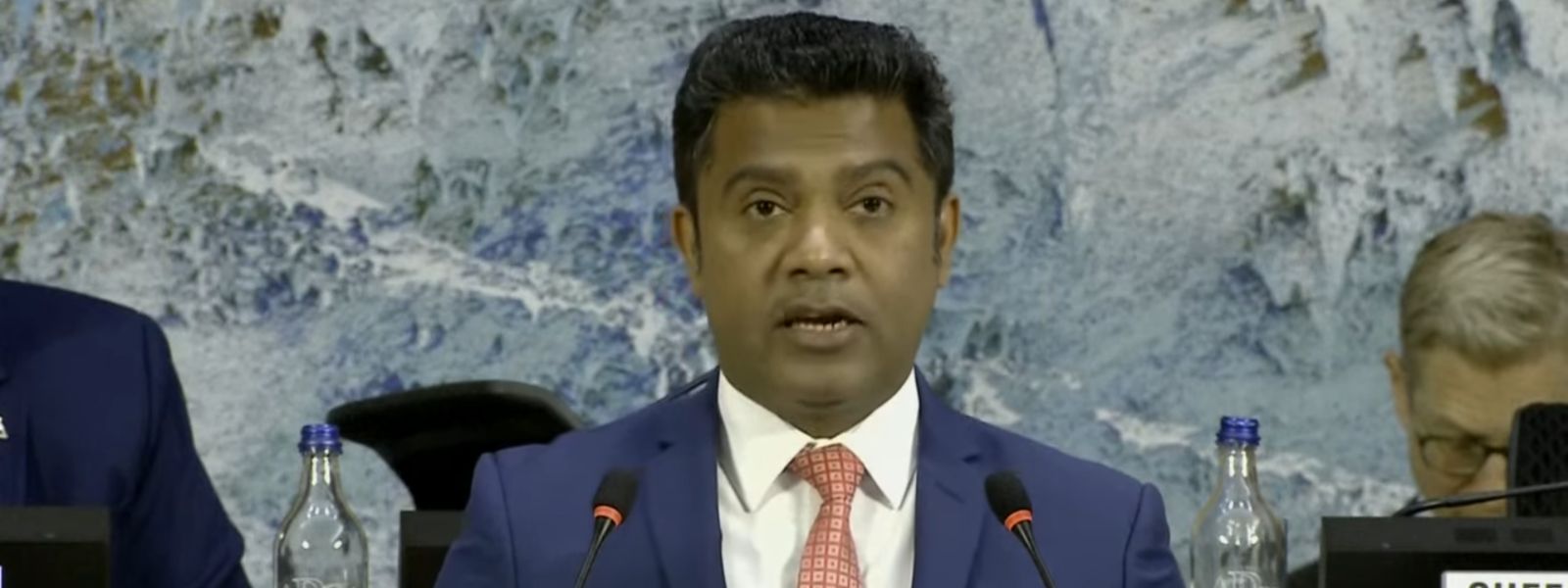
COLOMBO (News 1st); Health Minister Dr. Nalinda Jayatissa stated that this year holds special significance for Sri Lanka as the country marks 100 years of its public health system, describing it as a century of community-centred services that have become a cornerstone of national health achievements and social progress.
He noted that despite limited resources, Sri Lanka has achieved remarkable health outcomes through strong public health leadership, preventive care and community outreach.
Among the key achievements highlighted were significant reductions in maternal and child mortality, the elimination of malaria, effective control of communicable diseases, high immunization coverage and increased life expectancy.
However, the minister pointed out that Sri Lanka is now facing new and complex challenges, including the rapid rise of non-communicable diseases (NCDs), an aging population and growing mental health needs.
In response, he said Sri Lanka has embarked on an ambitious primary healthcare reform agenda through the establishment of Arogya health and wellness centres. These centres are community-based and led by family doctors, supported by multidisciplinary teams. Their focus extends beyond treating illness to promoting health, preventing disease, identifying risks early and providing continuous, people-centred care close to where communities live.
Dr. Jayatissa revealed that 41 such centres have already been established, with plans to expand to 300 by the end of this year and to 450 centres next year.
The reform programme prioritises early detection of NCDs and common cancers, while also strengthening elderly care, rehabilitation, palliative care, home-based services, adolescent health and primary mental healthcare.
He added that, guided by the national policy on health and well-being and the national health strategic master plan, Sri Lanka is working towards building a modern, wellness-oriented primary healthcare model based on a life-course approach to health.
Dr. Jayatissa reaffirmed Sri Lanka’s commitment to collaborating with all member states and partners to develop resilient, inclusive and people-centred health systems that ensure no one is left behind.
Other Articles








Featured News
-835300_550x300.jpg)


News 1st, MTV Channel (Pvt) Ltd, MBC Networks (Pvt) Ltd, 45/3, Braybrooke Street, Colombo-02.
T.P : +94 114 792 700,
Fax : +94 114 792 733
T.P : +94 114 792 700,
Fax : +94 114 792 733




 |  |  |
|---|---|---|
 |  |  |
 |  |  |
 |

.gif)