.webp)


Global Supply Shock Could Push 45 Million More People Into Hunger, Warns IMF



.png )
COLOMBO (News 1st); Global supply disruptions are driving a deepening food security crisis that could push another 45 million people into hunger, raising the total number of undernourished people worldwide to more than 360 million, International Monetary Fund Managing Director Kristalina Georgieva has warned.
Speaking on the wide-ranging consequences of ongoing supply interruptions, Georgieva said transport disruptions and sharply higher fertilizer prices are worsening food insecurity and could intensify the crisis over time. She said the ripple effects from supply shocks are already being felt across multiple sectors in a highly interconnected global economy.
According to the IMF chief, disruptions in the transport and energy sectors are a major driver of the food crisis. Shortages of refined products such as diesel and jet fuel have disrupted transportation, trade, and tourism, undermining the movement of food and essential goods across borders. These disruptions are occurring at a time when global supply chains remain tightly linked and vulnerable.
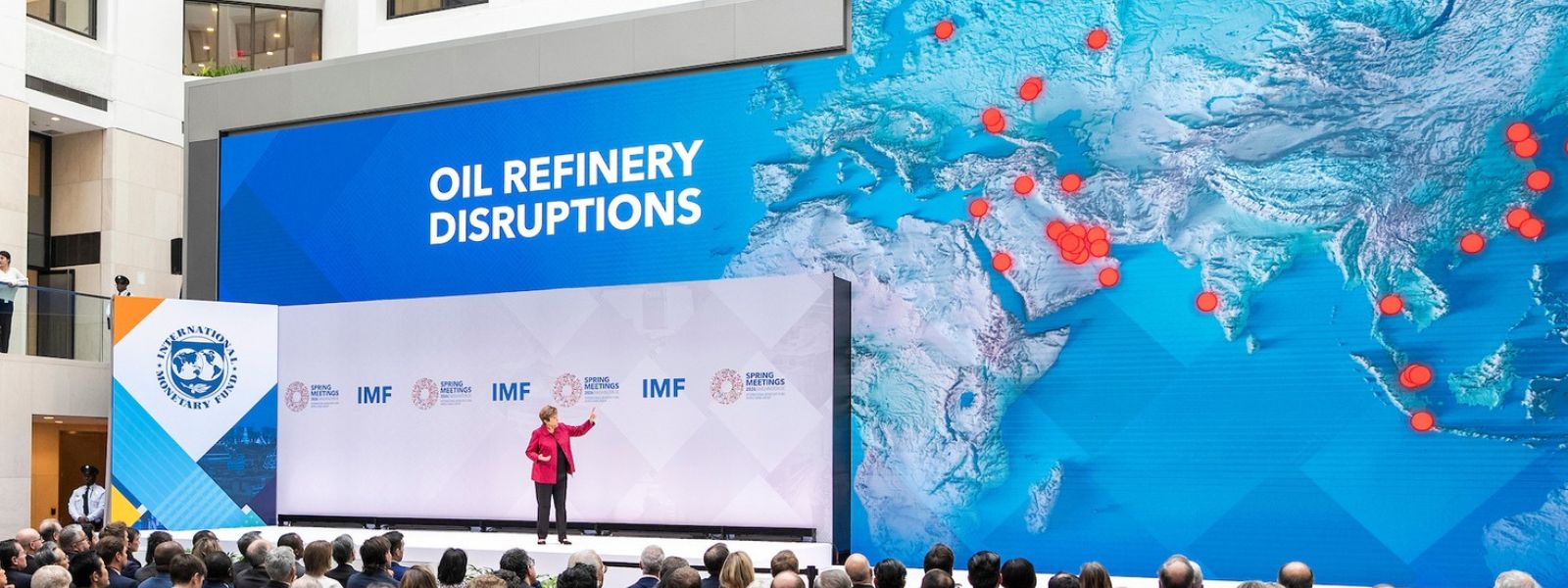
Georgieva said oil refinery disruptions have also emerged as a critical concern, as refineries must maintain minimum flow rates to operate safely and efficiently. Warning signs are flashing 'red in many far‑flung places,' she cautioned, signaling stress across energy systems that underpin global trade and food distribution.
Beyond fuel and food, she highlighted widening industrial supply chain disruptions tied to key inputs. These include sulfur, helium used in silicon chipmaking and MRI imaging, and naphtha used in plastics production. Such dependencies, she said, are amplifying the economic fallout of the supply shock.
Georgieva outlined three main channels through which the shock is affecting the global economy.
The first is the direct price impact and supply shortages. Higher prices for critical inputs are filtering through to a broad range of consumer goods, pushing inflation higher. At the same time, shortages are reducing demand abruptly, as consumers and industries are forced to cut back.
The second channel is inflation expectations, which Georgieva warned could become unanchored and ignite a costly inflationary cycle.
The third channel is the tightening of financial conditions. From what had been a highly supportive financial environment, conditions have tightened in an orderly way. Emerging market bond spreads have widened substantially, equity prices have adjusted, and the U.S. dollar has appreciated.
More recently, Georgieva noted signs of some easing in financial conditions.
Drawing historical parallels, Georgieva said the world has faced similar shocks before, including during the 1970s and earlier in the current decade. In past episodes, a significant portion of such shocks eventually dissipated, she said, leading to a new economic equilibrium.
“Supply recovers and demand adjusts,” Georgieva said, noting that new capacity eventually comes on stream and energy efficiency rises. However, she emphasized that until those adjustments take hold, the human cost ,particularly in terms of global hunger, remains severe and immediate.
Other Articles
-834628_550x300.jpg)

-834603_550x300.jpg)






Featured News




News 1st, MTV Channel (Pvt) Ltd, MBC Networks (Pvt) Ltd, 45/3, Braybrooke Street, Colombo-02.
T.P : +94 114 792 700,
Fax : +94 114 792 733
T.P : +94 114 792 700,
Fax : +94 114 792 733




 |  |  |
|---|---|---|
 |  |  |
 |  |  |
 |

.gif)