.webp)


Sri Lanka Among Countries of Concern as Powerful El Niño Strengthens



.png )
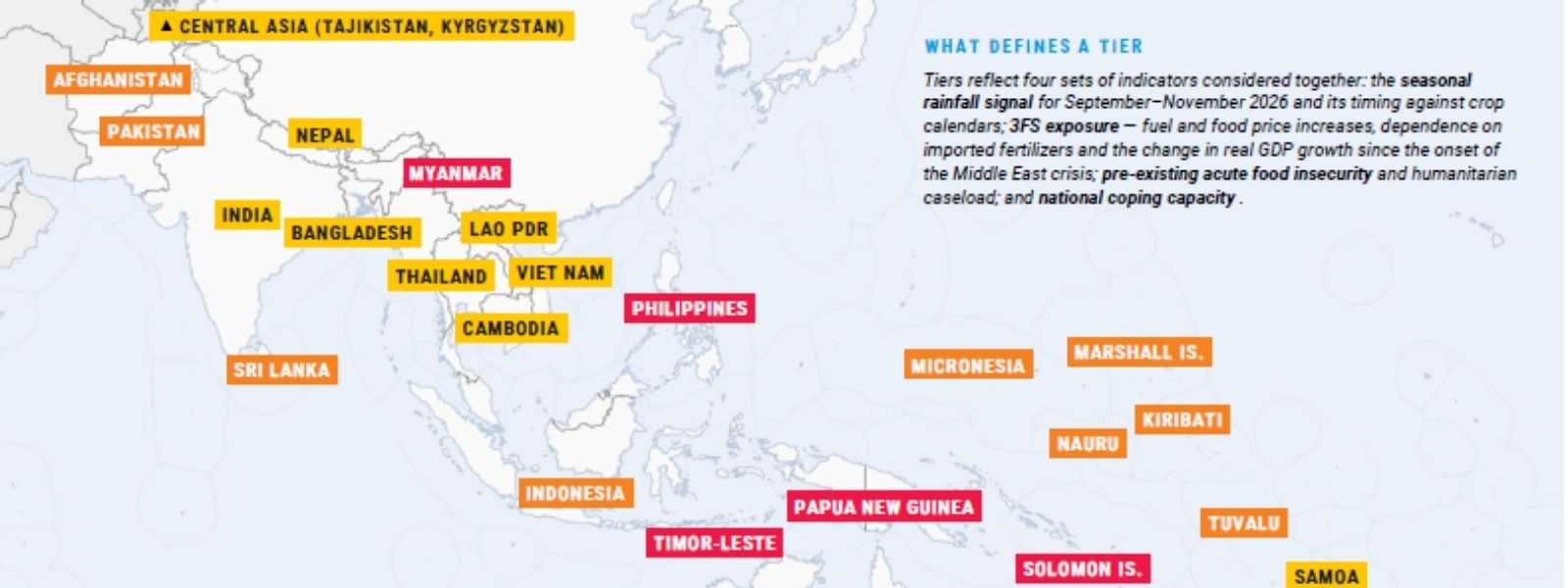
COLOMBO (News 1st): Sri Lanka has been identified as one of the countries requiring close monitoring as a potentially historic El Niño event strengthens across the Asia-Pacific region, with experts warning that the country could face a combination of heavier-than-normal rainfall, increased flooding risks and continued economic pressures linked to higher fuel, fertilizer and food costs.
The warning comes in a new regional assessment, prepared by the Food and Agriculture Organization (FAO), World Food Programme (WFP), UN Women, the World Meteorological Organization (WMO) and the UN Office for the Coordination of Humanitarian Affairs (OCHA).
The report warns that Asia and the Pacific are entering a period of increasingly complex and overlapping risks driven by a strengthening El Niño, a potentially positive Indian Ocean Dipole and continuing economic fallout from the Middle East crisis.
According to the report, the current El Niño could rank among the strongest on record and may extend well into 2027. While much of the attention across the region has focused on drought risks in countries such as Indonesia, the Philippines and Papua New Guinea, Sri Lanka is among a group of countries where wetter-than-average conditions are considered the more significant threat.
The assessment places Sri Lanka in the category of countries facing"elevated concern", highlighting the possibility of above-average rainfall during the latter part of 2026. Officials note that the risk becomes particularly important from October onwards, coinciding with Sri Lanka's Second Inter-Monsoon period, which is traditionally among the wettest times of the year, followed by the Northeast Monsoon.
The report notes that a substantial proportion of Sri Lanka's annual rainfall is received during this period and warns that while enhanced rainfall can bring benefits, including replenishing reservoirs and improving water availability, excessive rainfall could also trigger flooding, waterlogging and disruptions to agriculture.
Particular attention has been drawn to the upcoming Maha cultivation season, the country's principal rice-growing season. Analysts say the timing of the climate outlook is significant because Maha cultivation begins between September and November, precisely when forecasts indicate rainfall could intensify. Excessive rainfall during planting periods can delay agricultural operations, damage crops and increase flood-related losses. At the same time, improved rainfall can help restore irrigation systems and water storage levels.
Beyond the climate outlook, the report highlights what it describes as a "convergence risk" facing Sri Lanka. Researchers warn that climate threats may combine with economic pressures already affecting households and farmers.
According to the assessment, Sri Lanka remains vulnerable to elevated fuel prices, fertilizer costs and food market volatility stemming from the Middle East crisis. The report notes that diesel prices remain about 44 percent above pre-crisis levels, gasoline prices are approximately 41 percent higher, and inflationary pressures continue to affect households and businesses. Sri Lanka is also heavily exposed to fertilizer imports and international commodity markets, particularly wheat.
The analysis warns that higher agricultural input costs could coincide with periods of excessive rainfall or flooding during the Maha season, potentially creating additional challenges for farmers and food production. This combination of climate pressures and economic costs is one of the key reasons Sri Lanka has been categorized among countries of elevated concern within the regional assessment.
Experts also point out that Sri Lanka has historically shown a strong relationship with wetter-than-average conditions during major El Niño events. Historical analysis contained in the report identifies Sri Lanka as having a high susceptibility to above-average rainfall during El Niño periods, reinforcing concerns that rainfall levels later this year could exceed seasonal norms.
The broader regional report warns that the combined impact of climate disruption, higher fuel costs, fertilizer market instability and rising food prices could leave millions more people across Asia and the Pacific vulnerable to food insecurity. The World Food Programme estimates that an additional 8.2 million people could face acute food insecurity in monitored countries if conditions worsen.
Despite the concerns, the assessment notes that there remains a critical window for preparedness and anticipatory action. While risks are increasing, widespread impacts have not yet materialized, providing governments and humanitarian agencies with an opportunity to strengthen monitoring systems, improve preparedness measures and implement early interventions before conditions deteriorate further.
For Sri Lanka, the months ahead will be watched closely as meteorologists, agricultural authorities and disaster management agencies monitor the evolution of El Niño, rainfall patterns and economic pressures that could shape the country's food security, agriculture and disaster risk outlook through late 2026 and into 2027.
Other Articles






Featured News


-849213_550x300.jpg)

News 1st, MTV Channel (Pvt) Ltd, MBC Networks (Pvt) Ltd, 45/3, Braybrooke Street, Colombo-02.
T.P : +94 114 792 700,
Fax : +94 114 792 733
T.P : +94 114 792 700,
Fax : +94 114 792 733




 |  |  |
|---|---|---|
 |  |  |
 |  |  |
 |

.gif)