.webp)


Sri Lanka’s Opposition Splinters As Alliances Battle for Political Relevance



.png )
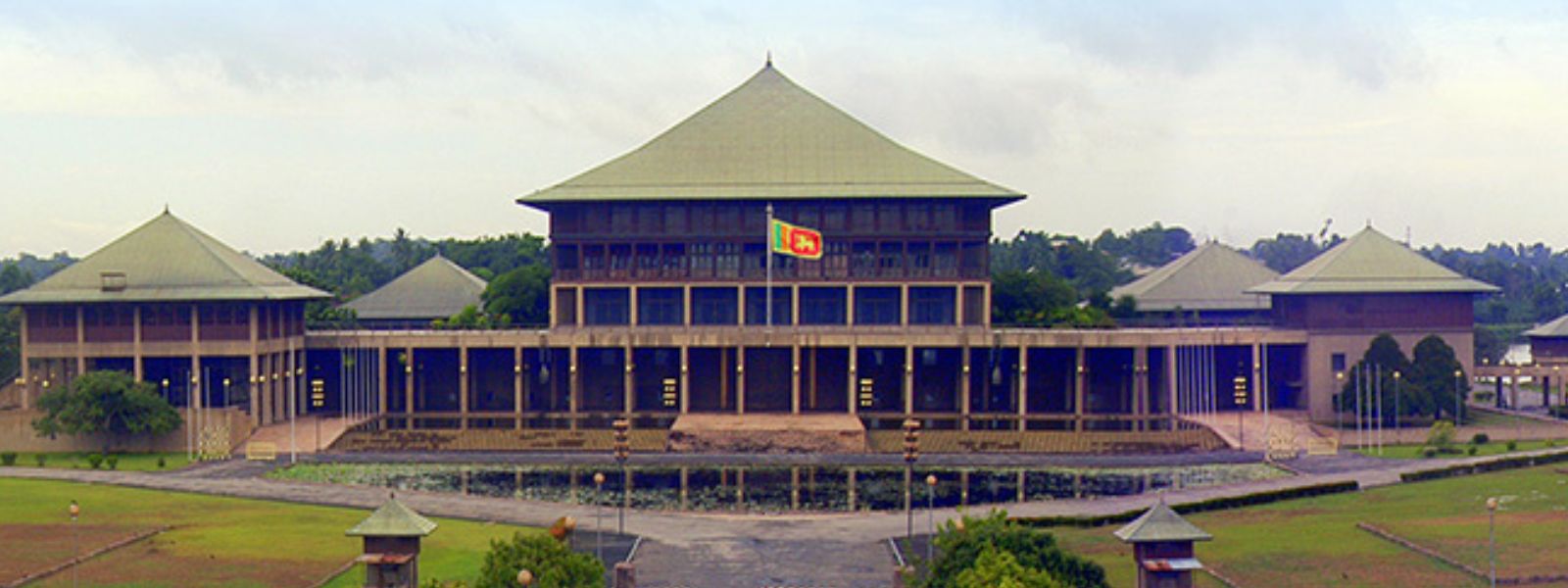
COLOMBO (News 1st); Sri Lanka’s opposition is facing growing questions over its future direction as its 66 Members of Parliament become increasingly divided among multiple political alliances, platforms and emerging power centres.
The evolving political landscape has sparked intense debate over leadership, strategy and the opposition’s ability to function as a unified alternative to the government.
The latest developments began when a group of 21 opposition MPs announced that they had decided to operate as a separate bloc. At the same time, the People's Joint Opposition, led by Professor G.L. Peiris, has intensified its political activities, bringing together several opposition figures, including Dayasiri Jayasekara, who entered Parliament through the Samagi Jana Balawegaya (SJB).
Meanwhile, the Sri Lanka Podujana Peramuna (SLPP), under the leadership of Namal Rajapaksa, has launched its own opposition platform, A-Team NextWave. Simultaneously, several United National Party (UNP) members are reportedly working to bring former President Ranil Wickremesinghe back into active politics.
As political alignments continue to shift, questions have been raised about whether Opposition Leader Sajith Premadasa can maintain his position and authority within the opposition ranks.
Responding to those concerns, SJB Assistant Legal Secretary Mahesh Parakrama dismissed suggestions that the emerging alliances were aimed at undermining the Opposition Leader.
"It is not only the parties within our alliance. All parties are working together, including the Ceylon Workers' Congress led by Jeevan Thondaman. In the plantation sector, Digambaram and Thondaman traditionally operated from two separate camps. Today, even they have come together because of the need to address these issues collectively. Everyone is working together. This is not an effort directed against the Opposition Leader. He himself has made that very clear," Parakrama said.
However, the Sri Lanka Podujana Peramuna believes the opposition is not adequately performing its parliamentary role.
SLPP General Secretary Attorney-at-Law Sagara Kariyawasam said concerns remain over whether the country's main opposition is effectively representing public interests.
"Even we have concerns about whether the main Opposition in Parliament is fulfilling its responsibilities. However, as other Opposition parties, we are carrying out our role very effectively," he said.
When asked whether that amounted to criticism of Sajith Premadasa's leadership, Kariyawasam replied:
"Our view is that the main Opposition in Parliament is not speaking enough about the people's issues in this country and the wrongdoing that is taking place."
The SLPP Women's Front, meanwhile, used the opportunity to promote Namal Rajapaksa as a future national leader.
SLPP Elpitiya Pradeshiya Sabha Member Sheela Kannangara expressed confidence that Rajapaksa would emerge as a leading political figure ahead of the 2029 presidential election.
"When his father was President, we saw motorcycles in villages and households across the country. Many families owned three-wheelers and vehicles. Today, that situation is different and that saddens me. The son of a leader who brought prosperity to villages is preparing for 2029. We firmly believe that Namal Rajapaksa will become President in 2029. We believe that under his leadership, all Sri Lankans will benefit through prosperity, economic growth and a stronger future. As women, we have confidence in him. That will certainly happen. The lotus is beginning to bloom again. After former President Mahinda Rajapaksa stepped back, women rallied around Namal Rajapaksa. We see that clearly today. Wherever he goes, people reach out to shake his hand. Elderly people call him 'son'. There is remarkable public affection and confidence in him, particularly among women," she said.
The Sri Lanka Freedom Party also welcomed the formation of new opposition alliances.
SLFP Deputy General Secretary Dr. Suren Raghavan said a more active opposition would ultimately benefit democratic governance.
"It is a positive development that the alliance has been formed. If the Opposition has been inactive or sleeping, and this alliance helps create a more active Opposition, that is welcome. I oppose ethnic identity politics, which is one of the reasons I remain in the Sri Lanka Freedom Party. However, if these groups are coming together to raise public concerns, pressure the government and make demands on behalf of the people, I wish them well. They appear to be working actively. As for us in the Sri Lanka Freedom Party, we are part of the People’s Joint Opposition led by Professor G.L. Peiris," he said.
From the government's perspective, Agriculture Minister K.D. Lal Kantha argued that the growing fragmentation reflects a lack of confidence in the current opposition leadership.
"They have realised there is no future under the current Opposition Leader. That is why they are breaking away. The other parties aligned with him are no longer convinced about his leadership. The Samagi Jana Balawegaya itself was formed because its members believed they could not win alongside Ranil Wickremesinghe. Now the question is whether they can win alongside Sajith Premadasa. How many elections have they lost? There is a growing belief among their own allies that remaining with Sajith Premadasa is not yielding results," he said.
National People's Power MP Kanchana Welipitiya also pointed to the increasing fragmentation among opposition parties, noting that multiple groups are attempting to establish new alliances while discussions continue between various political camps.
"There are only 66 Opposition MPs in Parliament, yet they continue to break into different groups. Tamil parties are discussing a separate alliance. There are efforts involving Namal Rajapaksa and independent political groups. The People's Joint Opposition is trying to unite various opposition forces. At the same time, discussions continue between the UNP and the SJB. These discussions have been ongoing for nearly two years. The question is whether any of them have succeeded. So far, none of these efforts have produced a successful outcome," he said.
Other Articles








Featured News
-847152_550x300.jpg)




News 1st, MTV Channel (Pvt) Ltd, MBC Networks (Pvt) Ltd, 45/3, Braybrooke Street, Colombo-02.
T.P : +94 114 792 700,
Fax : +94 114 792 733
T.P : +94 114 792 700,
Fax : +94 114 792 733




 |  |  |
|---|---|---|
 |  |  |
 |  |  |
 |

.gif)