.webp)


“One-off, no strings review”: IMF explains US$ 206M rapid cash for Sri Lanka



.png )
COLOMBO (News 1st); Sri Lanka has secured immediate access to about US$206 million in emergency financing from the International Monetary Fund under the Rapid Financing Instrument (RFI)—a move the IMF says is designed to quickly bridge a financing gap created by an urgent balance-of-payments shock, while the country’s ongoing IMF program review is deferred into next year.
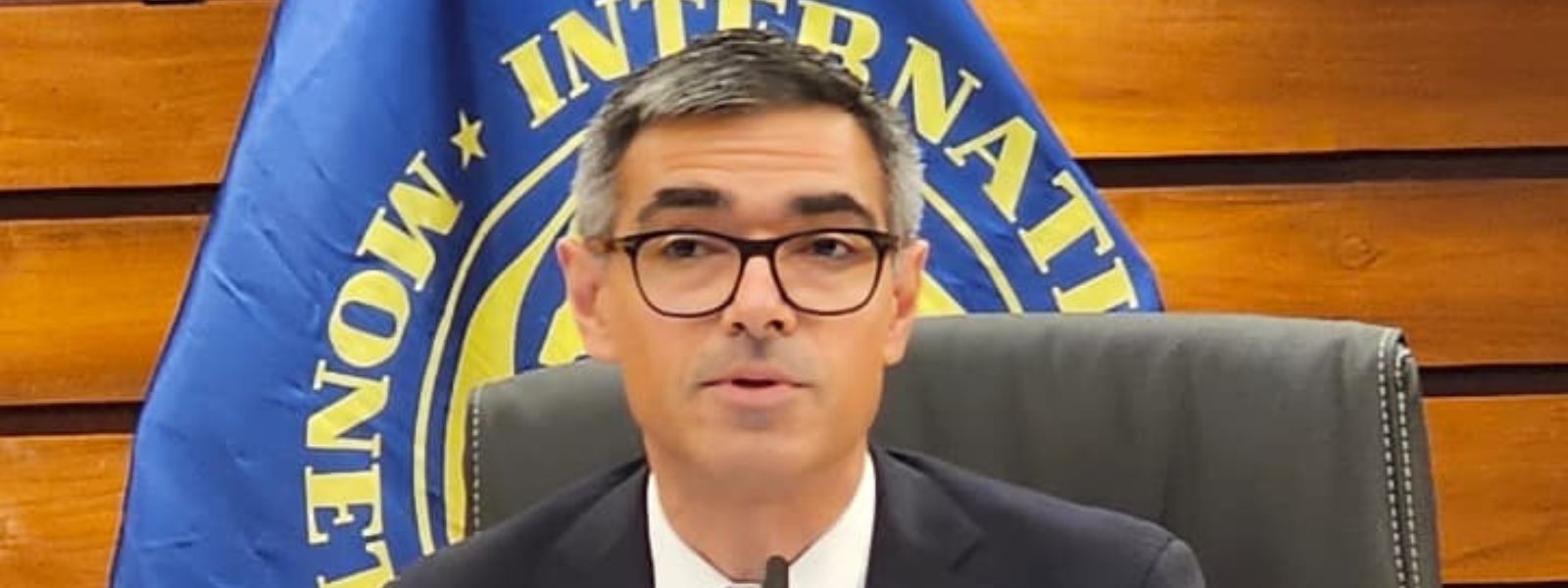
Speaking after the IMF’s board meeting approving the emergency package, Evan Papageorgiou, IMF Mission Chief for Sri Lanka, confirmed that the decision was specifically tied to emergency financing—and that it comes alongside a pause in the timeline for Sri Lanka’s existing arrangement under the Extended Fund Facility (EFF).
“Today’s board meeting was about approving the emergency financing,” Papageorgiou said, adding that “this has also meant that we are deferring, in coordination with the authorities, we’re deferring the review of the regular EFF… arrangement of Sri Lanka with the IMF.”
At the IMF briefing, News 1st raised three direct questions on the structure and impact of the emergency support.
“Will the IMF be looking for any assurances from the Sri Lankan government for this facility (rapid financing instrument amounting to about 206 million US dollars) and what are the conditions in place in accessing the facility and the funds? And thirdly, many argue that this facility will add more financial constraints on the debt-ridden country right now. What is your opinion on that?”
Papageorgiou’s response laid out the IMF’s framing: the RFI is designed for speed, triggered by urgency—and is structured differently from Sri Lanka’s longer-term IMF engagement under the EFF.
According to Papageorgiou, the central requirement for approving RFI financing is a clear justification that the country faces an urgent and potentially destabilizing crisis.
“So, to the first question about assurances,” he said, “this is a requirement and a justification of an urgent BOP, balance of payment need, which if were to be unaddressed, would result in an immediate and severe economic disruption.”
The IMF Mission Chief said the RFI disbursement is intended as crucial budget support tied to disaster response, including immediate recovery priorities.
“The RFI… will provide crucial budget support to finance disaster response,” Papageorgiou said, “including the restoration of essential services, macro-critical infrastructure repairs, and emergency assistance to those affected.”
Papageorgiou linked this emergency financing to significant natural disaster impacts, referencing cyclone Ditwah and the damage that followed.
“A significant natural disaster and significant events, such as cyclone Ditwah and the ensuing damages,” he said, “requires a very careful understanding of all these effects…”
A key distinction, Papageorgiou emphasized, is that the RFI is not a rolling IMF program. It is a single disbursement—a one-time release—rather than a multi-stage facility with repeated reviews.
“Now, it’s important to understand that the RFI is a single disbursement, it’s a one-off disbursement,” he said. “So, today’s board meeting did just that. There’s no other purchases or disbursements after this.”
He further noted that, unlike the EFF, the RFI does not operate with ongoing program conditionality reviews.
“And as such, there’s also no review on program conditionality, unlike the EFF, which is an ongoing and long-standing engagement with the country.”
Papageorgiou acknowledged that RFI support can sometimes involve “prior actions,” but said Sri Lanka’s case was treated differently.
“In the case of RFI, there can be prior actions,” he said. “But in the case of Sri Lanka, because we have such a close contact and we know Sri Lanka’s case very well, those prior actions do not apply.”
While the emergency money is immediate, the broader IMF engagement continues—just on a delayed clock. Papageorgiou said the fifth review has been pushed back.
“The fifth review has been deferred to the next year,” he said.
He added that the IMF expects to return for talks in early 2026.
“We will visit Sri Lanka in early 2026 to resume discussions.”
Those discussions, he indicated, will be wide-ranging—covering how the disaster changes economic assumptions, policy direction, and the reform path already planned under the EFF.
“There are many things that will be discussed,” he said, including the effects “on program parameters, on economic policies,” and how planned reforms, “objectives and priorities… fit into the next phase of the program.”
Papageorgiou also addressed what lies ahead in terms of potential changes to the scale of IMF support, making it clear that “augmentation” is on the table—but tied to broader program discussions.
“Augmentation is also part of that discussion and should be considered at the same time as those requests,” he said.
He cautioned that the IMF will have “more to say” after returning and getting deeper into details.
“So, we will have more to say when we come back and we have a greater chance to discuss issues in greater detail.”
A major factor shaping the next phase, the IMF Mission Chief noted, will be the post-disaster data picture—built through assessments now underway.
“Very important again here is to understand the post-disaster needs through the rapid assessment, as well as the post-disaster needs assessment that the authorities are jointly with the UN are attempting at the moment.”
Other Articles








Featured News
-819380_550x300.jpg)

-812087_550x300.jpg)
-810262_550x300.jpg)
News 1st, MTV Channel (Pvt) Ltd, MBC Networks (Pvt) Ltd, 45/3, Braybrooke Street, Colombo-02.
T.P : +94 114 792 700,
Fax : +94 114 792 733
T.P : +94 114 792 700,
Fax : +94 114 792 733




 |  |  |
|---|---|---|
 |  |  |
 |  |  |
 |

.gif)